

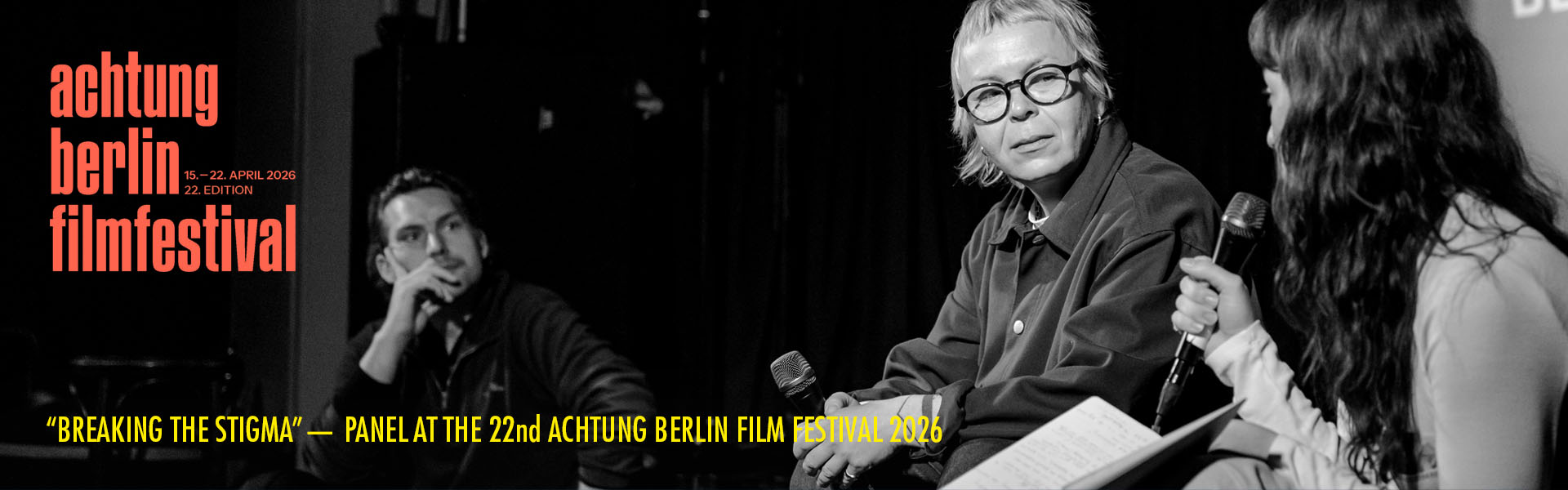
The Panel
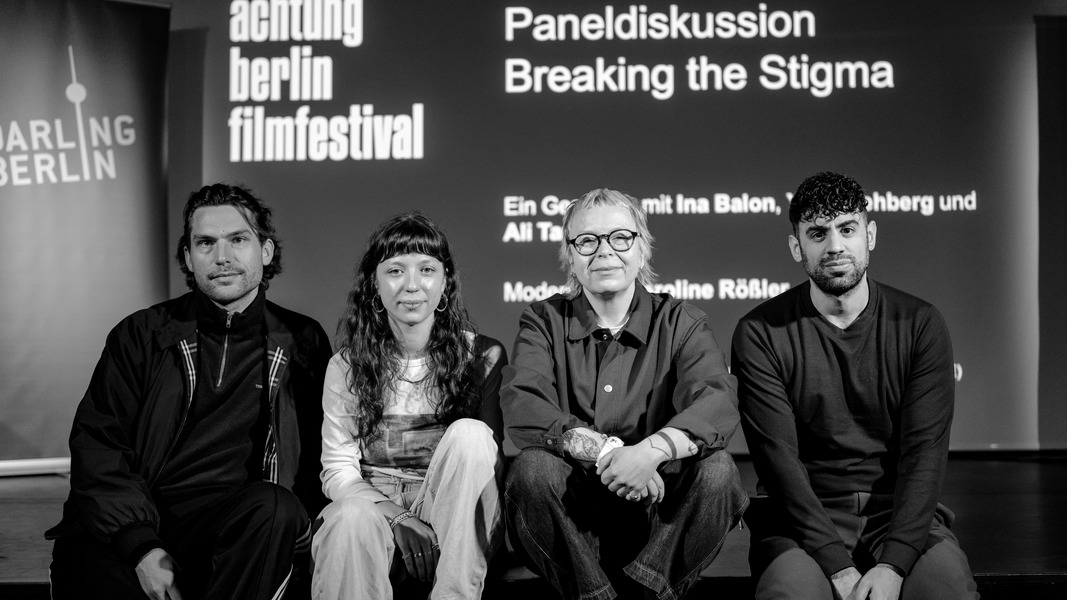
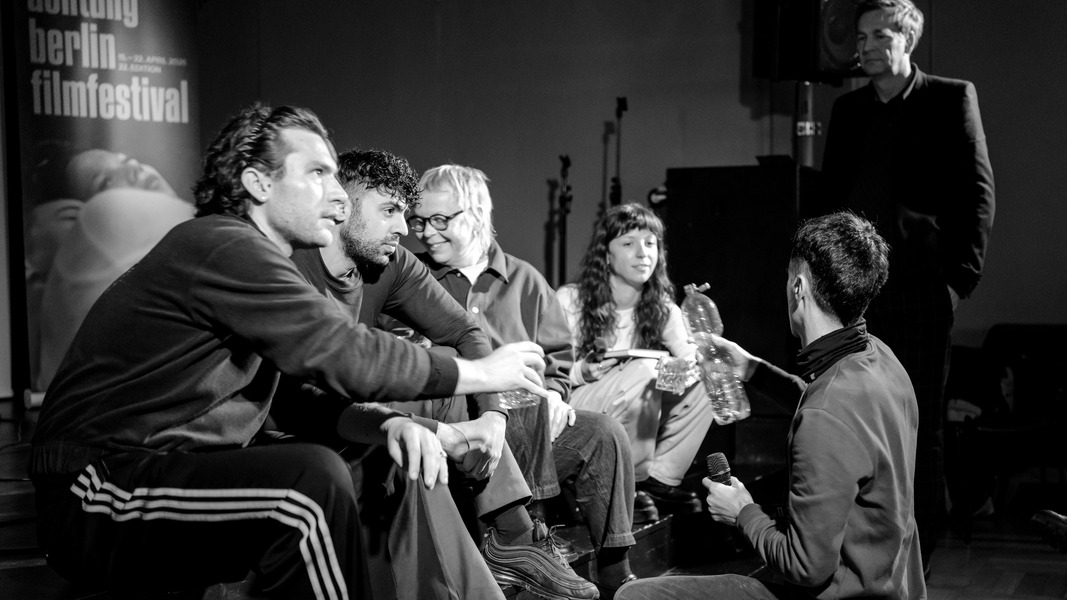
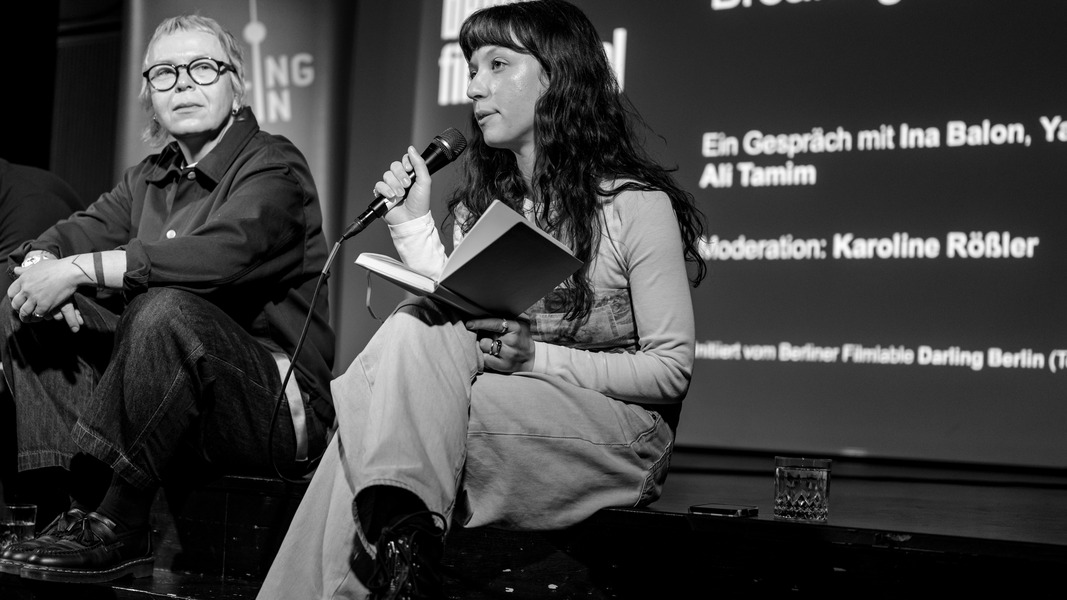
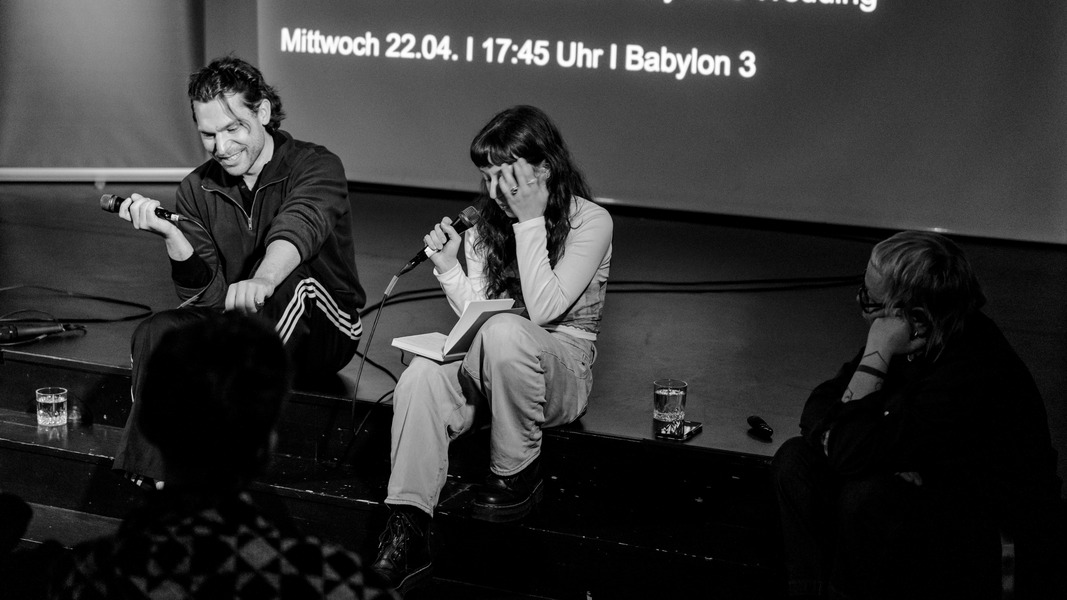
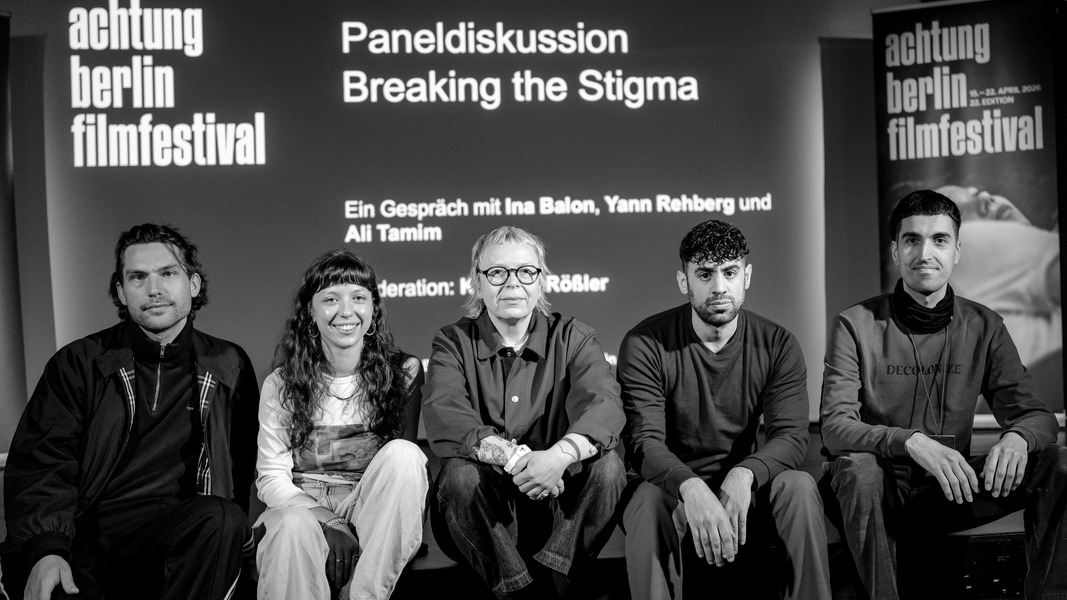
On the panel were the moderator and three directors presenting their latest festival entries:\
- Karoline Rößler (Moderator) — Director of INTERSECTION — EVERYTHING IS POLITICAL, graduation film at the Konrad Wolf Film University Babelsberg, to be screened in 2025 at DOK Leipzig and awarded the film.land.sachsen – Prize for Film Culture in Rural Areas, in the Berlin Special Program.
- Ina Balon — PLAN F, feature film debut in the Feature Film Competition, at the Hofer Filmtage 2025 awarded the Friedrich Baur Gold Prize (best directorial achievement in a first feature film) and the Hof Critics’ Award.
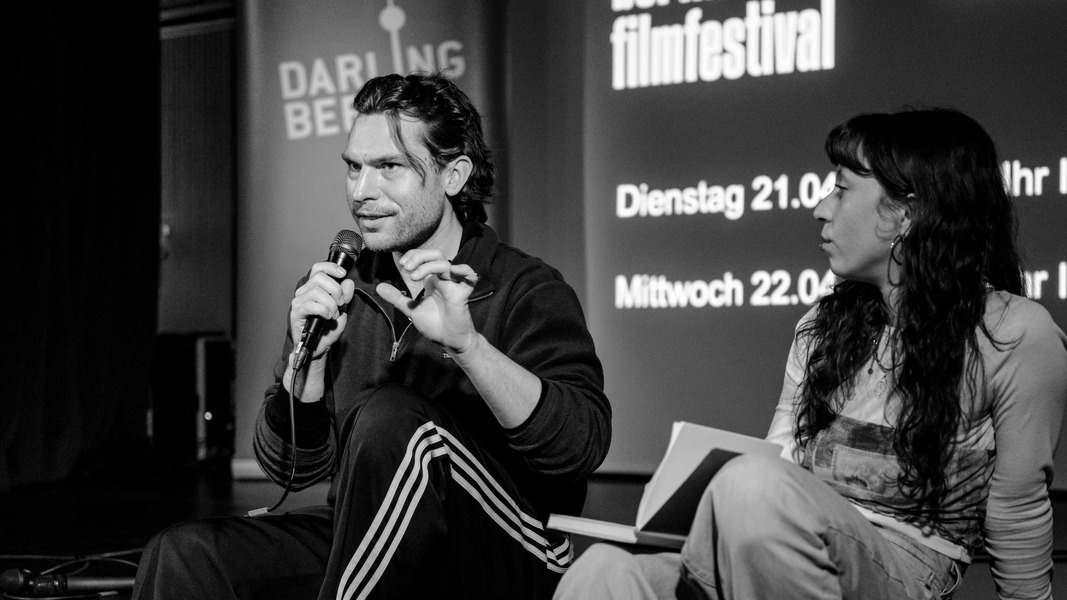
- Yann Rehberg — VOM BÖSEN BLICK, medium-length graduation film from the Film University Babelsberg KONRAD WOLF, in the Medium-Length Film Competition.
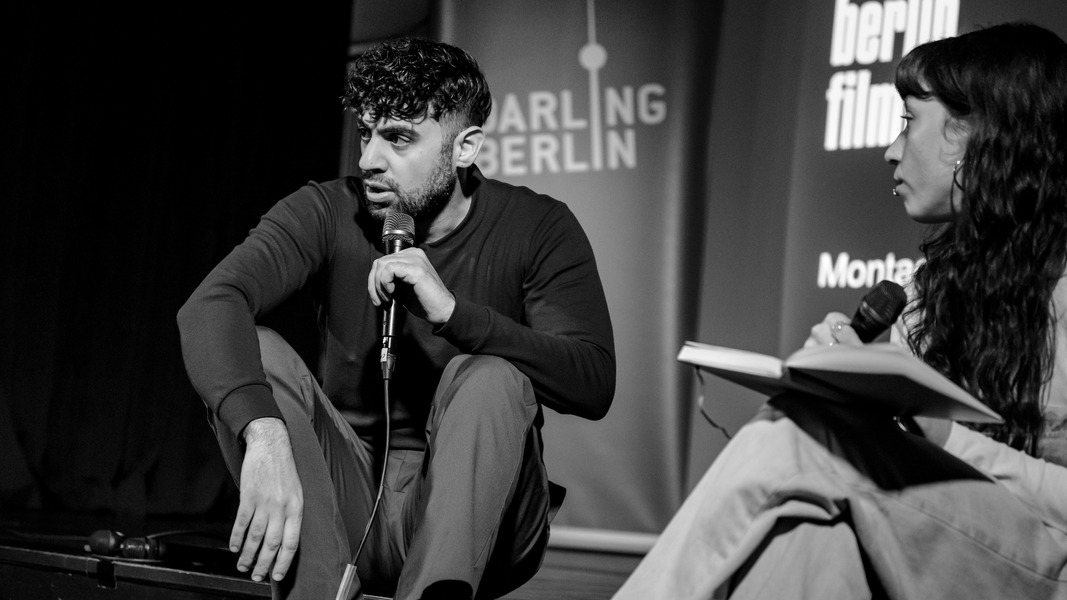
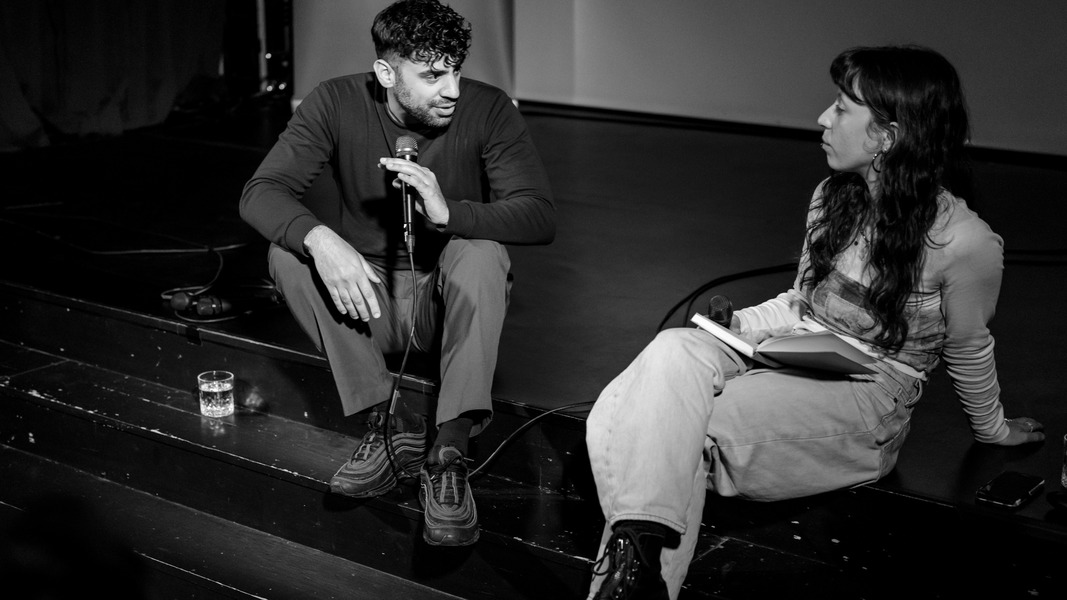
- Ali Tamim — NOAH, feature film debut in the Feature Film Competition, at the Max Ophüls Prize Film Festival, where it received awards for Best Screenplay and Socially Relevant Film.
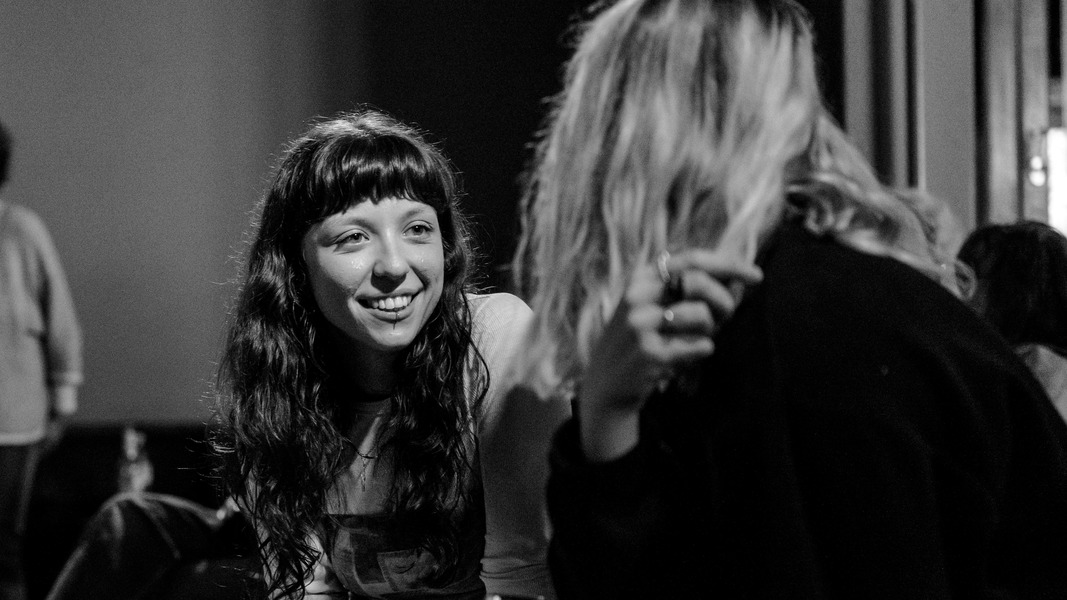
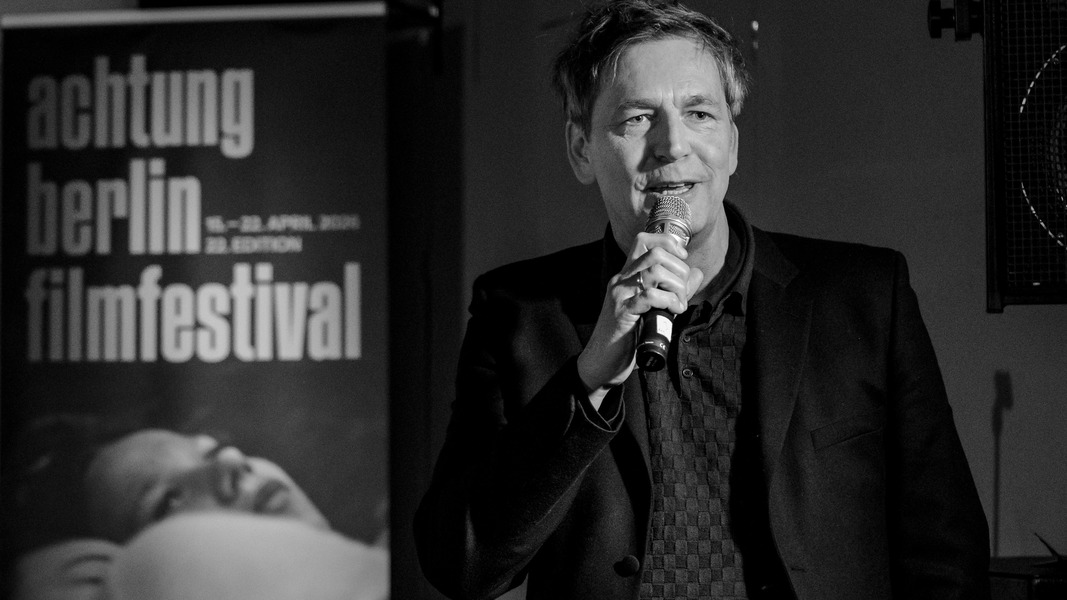
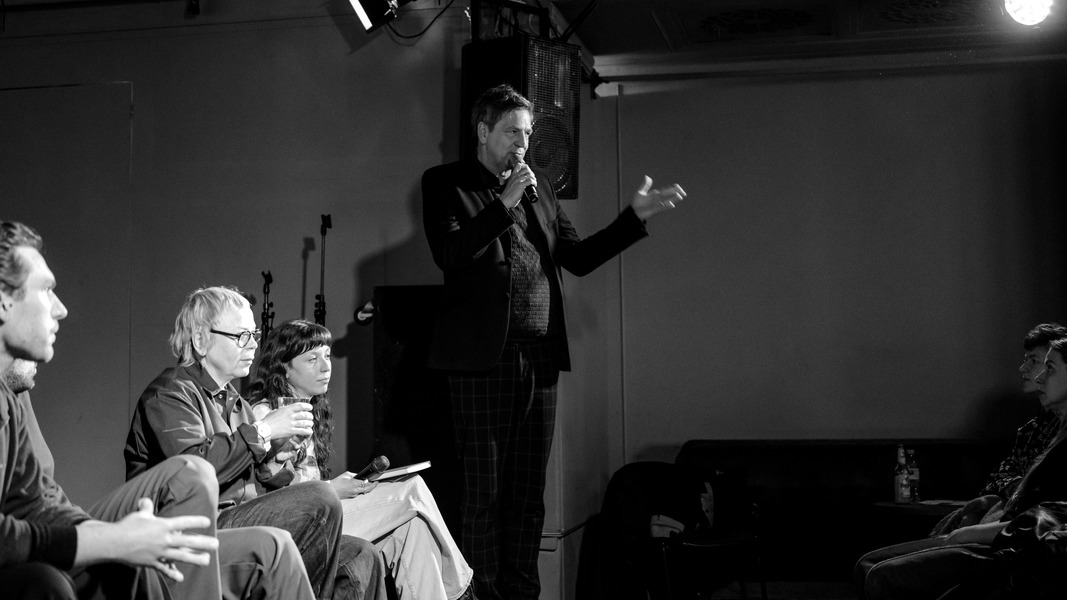
In his opening remarks, festival director Sebastian Brose expressly thanked Tone Frede (UCM.ONE / Darling Berlin) for the initiative and for helping shape the panel’s themes. Frede took charge of the audience microphone during the audience discussion.
Attitude, Not Program
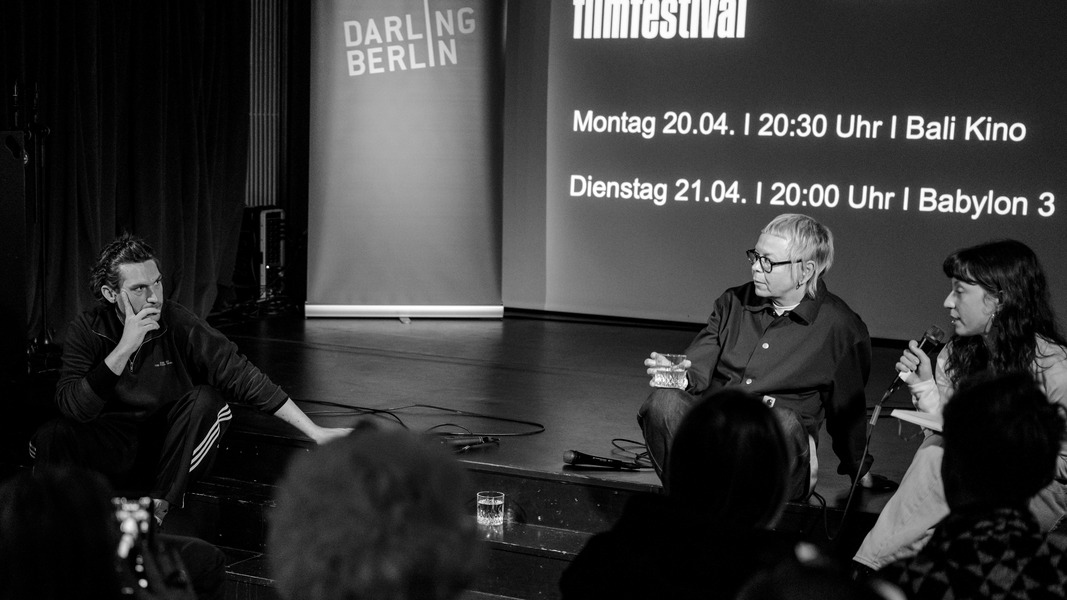
Following the cinematic opening featuring clips from all four works, Rößler led the discussion on the question of how the panelists themselves feel about the topic “Breaking the Stigma”: whether they enjoy discussing films from this perspective—or if they would actually prefer to talk about the content. Ali Tamim answered the question with a personal revelation: He said he had to be persuaded to participate in the panel at all, out of concern that he might end up in a role that the industry has been assigning him for years—that of the author who constantly cries out about how unjust everything is. He is not an activist, but a director and screenwriter; the political stance remains inherent to his films as long as it is necessary.
Yann Rehberg, represented on the panel with his graduation film “Vom bösen Blick,” agreed with Tamim and articulated one of the most precise distinctions of the afternoon—calmly, without any exaggeration:
“I didn’t think to myself at the beginning: ‘Oh wow, this is really going to break down the stigmas.’ Not for a single second, actually. Rather, it’s an attitude—how you view the world and how you then write characters and how you direct them.”
— Yann Rehberg, director of “Vom bösen Blick”
“Vom bösen Blick,” produced in co-production with RBB, is set in a youth club where an unproven allegation of abuse is making the rounds and is neither clarified nor refuted. The story is told from the perspective of a social worker who must decide whom to believe—and who never makes that decision by the end. What breaks down in his film, says Rehberg, is not primarily the individual, but rather the social space that supported both sides. The youth club becomes the true collateral damage.
Key question: Who should be the one to raise awareness?
Rößler had already posed the question to the group earlier, without attempting to answer it herself: Whose responsibility is it, really, to break a stigma—that of the artists who make films about it, or that of a society that speaks about itself? She deliberately left the answer open, inviting the audience to join the discussion—and the two sides of the debate immediately clashed.
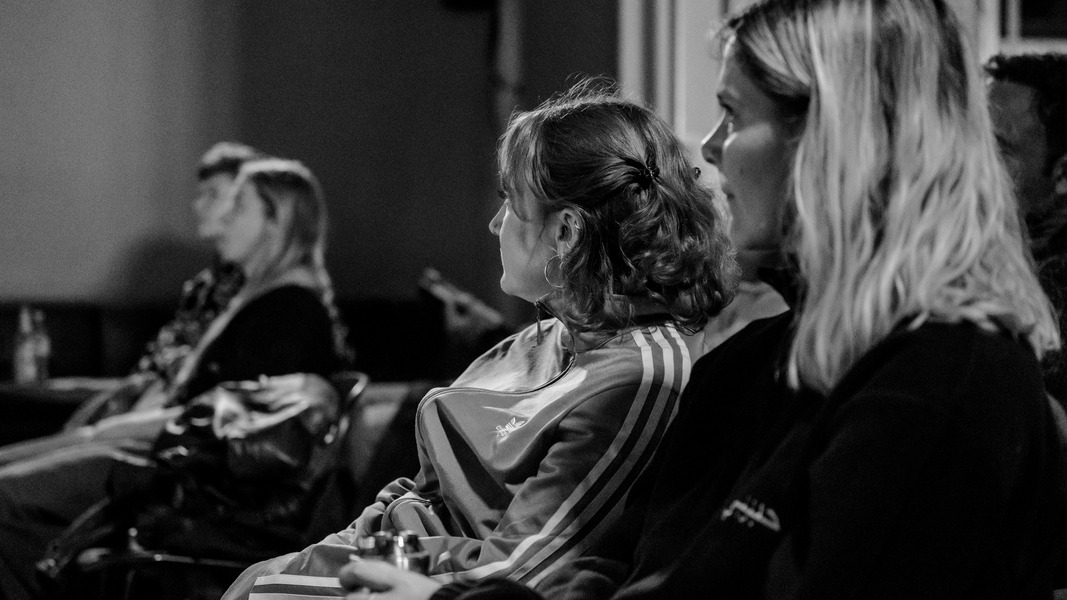
One audience member picked up on Tamim’s personal disclosure from the first part of the panel and turned it around: Anyone who makes such a film and is invited to a discussion like this must also be willing to speak out; otherwise, no stigma will be broken. Tamim replied pointedly:
“And can we take a break sometimes? Can we just make movies and can we just talk about the beauty of trees, or do we have to speak up all the time and say, ‘This is who we are, we are victims, we are victims, you are making us victims’?”
— Ali Tamim, director of “Noah”
A second audience member provided the way out of this apparent dilemma. She explicitly referred to the previous speaker, agreed with her “completely” that society as a whole must be involved in the issue—and articulated in a single sentence the boundary that Tamim had been seeking:
“But it shouldn’t be their life’s work. So you shouldn’t expect that if you have certain stigmas, certain experiences of discrimination, that you simply have to constantly point them out and try to make the world a better place.”
— From the audience
Two voices from the audience, both worthy of agreement, neither against the other—and in between, a panel discussion that was not forced to pit one against the other. The fact that this moment came not from the moderator but from the audience allowed the debate to conclude in a way that cannot be staged, but is made possible only through open dialogue—as Rößler facilitated that afternoon.
Later in the panel, as the audience questions continued, Tamim found the phrase for this stance that would stick with us that afternoon:
“Anyone who is an asshole and a misanthrope and goes into my film will remain an asshole and a misanthrope even after this film. And that’s why it’s very, very important to me not to make a film for this asshole, but to make a film for us.”
— Ali Tamim, director of “Noah”
What Tamim went on to explain was less a specific agenda than the core of his work: characters who live in worlds that oppress them—and who then seize the power to rebel against them. “Self-empowerment,” said Tamim, is for him the key word of his creative work.
“Noah,” produced by Schuldenberg Films in co-production with the Film University Babelsberg KONRAD WOLF and RBB (Leuchtstoff), tells the story of the circle of people surrounding a young man who lost his life during a police stop and remains present in the film only through his absence. Three storylines revolve around this central figure: Noah’s mother, who, on her way to the hospital, is thwarted by bureaucratic hurdles that prevent her from even saying goodbye to her son; a group of police officers, including Ibrahim, who struggles between his identity as a migrant and his identity as a police officer; and Malek and Musa from Noah’s neighborhood, who function in the film as an angry, associative meta-level.
Production Reality
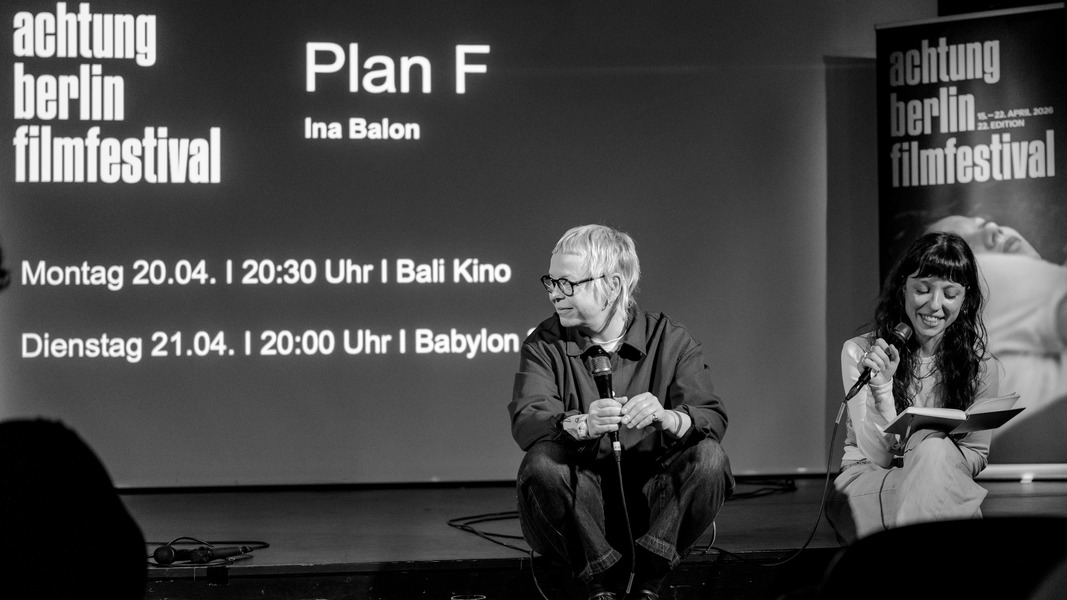
“Plan F” follows sisters Franka and Maya—the loud one and the quiet one—on a nocturnal odyssey through Berlin: Maya, in the midst of a deep depression, is staying with her parents in the countryside; Franka stumbles into her life there and drags her along on a road trip by car and S-Bahn, through the bars at Kottbusser Tor. What initially looks like a rescue mission by the supposedly resilient one takes a turn: Little by little, it becomes clear that Franka, too, is merely asserting her plan rather than having one—and that both of their lives are on the brink of failure.
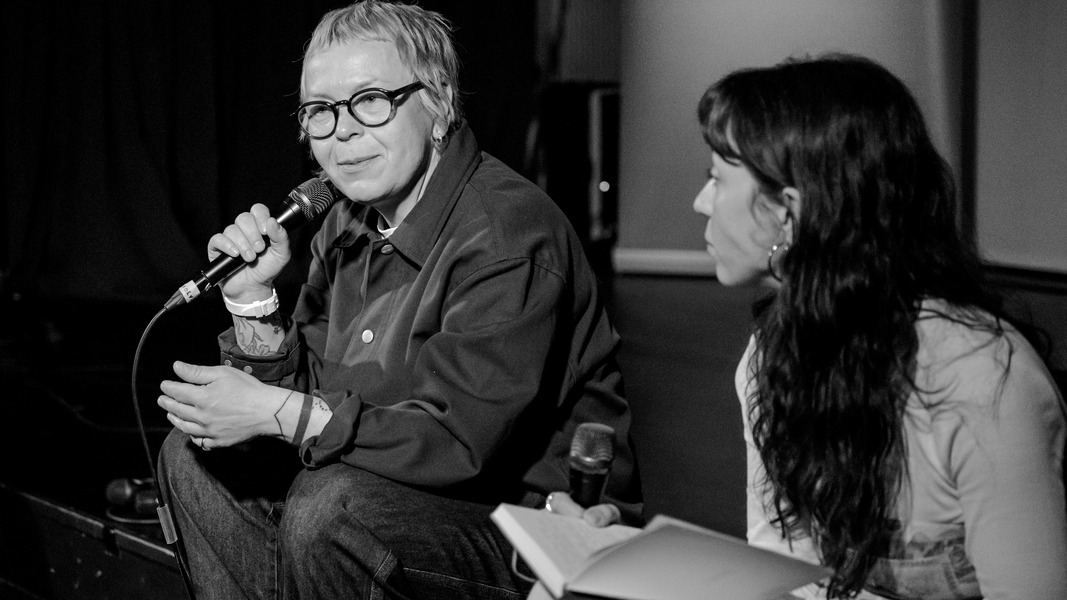
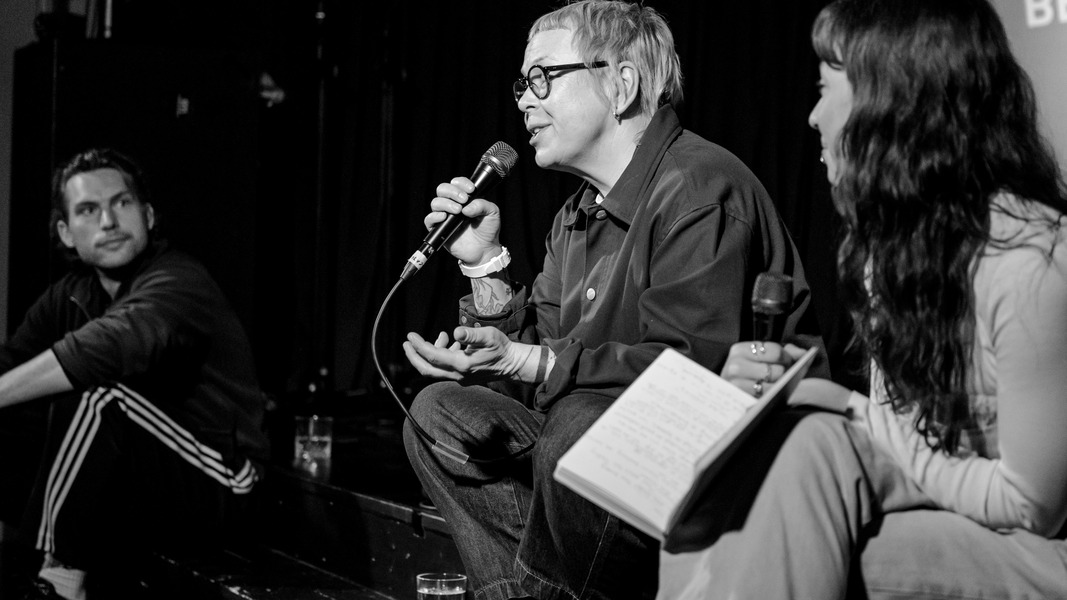
Ina Balon brought to the table the part of the conversation that funding committees like to brush aside in their rejections. Her feature film debut—produced by Ina Balon and Jannik Büddig (ZAK Film Productions)—is entirely self-financed, because scripts had been submitted and rejected for three years. After attending the 2024 Munich Film Festival, she decided she wouldn’t wait any longer. She describes her main characters, Franka and Maya, played by Bärbel Schwarz and Ursula Renneke, as women rarely seen in German cinema:
“That they’re just the way women are when they’re in their mid-40s. And that they’re allowed to fail, too. We’re always expected to be strong. Of course we’re strong, sure, but many of us fail as well. And you don’t see that often.”
— Ina Balon, director of “Plan F”
When asked by the moderator where she found the perseverance to continue without a funding commitment, Balon replied briefly and without pretense: “Because I have to do it. It’s just inside me; I have to do it.” The fact that she subsequently assured us she would “under no circumstances” want to shoot her next film without funding again—because she owes it to those involved to be able to pay them—rounded out an observation that lay like a bass line beneath the conversation that afternoon: that films like these in the German system often come into being in spite of the structures rather than being facilitated by them.
Audience Discussion: Funding, Editing, Distribution
Questions from the audience quickly shifted the discussion away from the immediate context of the film. How do you deal with producers who dominate their own material? What role do editorial teams play when it comes to socially critical topics? And how does a mid-length film, a documentary, or a debut film without a distribution network even find its audience?
Tamim recalled a—very politely worded—rejection from ZDF regarding “Noah”: They loved the script, but police violence was “not a German topic”; if the police were made a bit more approachable, the film could “become German.” Balon spoke of a project from two years prior about police violence and soccer hooligans, which an editorial team had rejected by asking why a woman would even want to make such a “violent men’s film.” And when Tamim later referred to the production conditions of the Neue Deutsche Welle—citing interviews with Wim Wenders, who at the time had needed four films to find his stylistic voice—this aside contained an observation that lingered palpably in the room: that today’s market barely allows emerging filmmakers the privilege of first experimenting and finding their way.
The topic of Impact Producing, which had been discussed the previous day at another panel, also took up a brief side thread. A member of the audience, herself an actress and impact coordinator, warned against placing the burden of impact campaigns on the shoulders of directors: Such a campaign requires “a completely separate department”—a position that Rößler confirmed from her own experience with her documentary film.
Festival Partnership
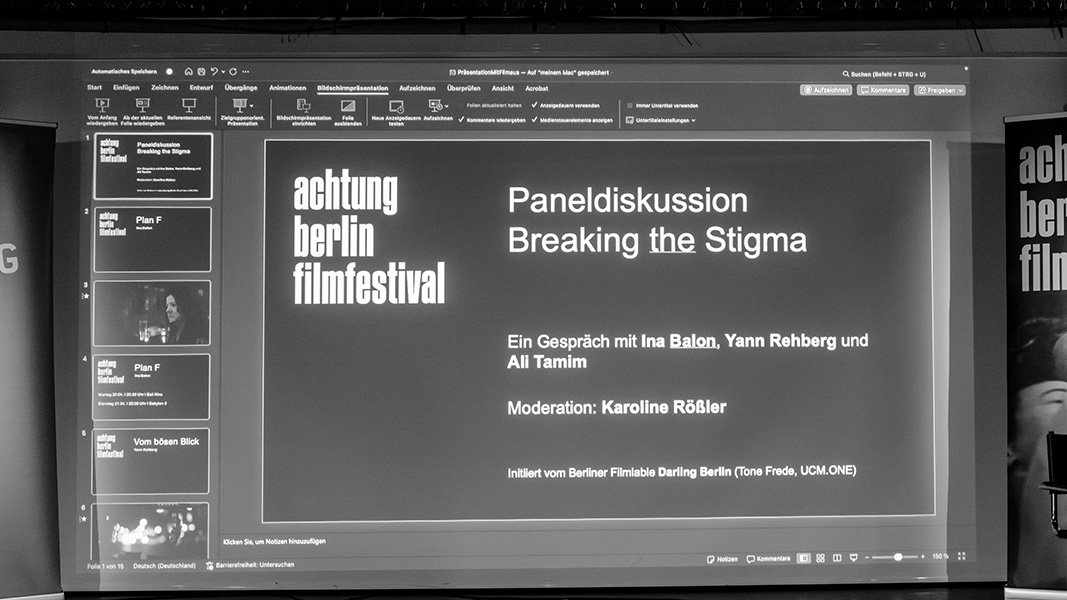
For the eleventh consecutive year, UCM.ONE / Darling Berlin is an official partner of the achtung berlin film festival; UCM.ONE is once again sponsoring the Best Acting Award, worth 1,000 euros. This year, the label is also represented in the feature film competition with “Plan F” and initiated the panel “Breaking the Stigma,” which it organized in collaboration with the festival management. “Plan F” by Ina Balon will be released in theaters at the end of 2026 via the UCM.ONE film label Darling Berlin.
At a glance: The panel overview
| Title: | Breaking the Stigma — Panel Discussion |
| Date & Time: | Monday, April 20, 2026, 4:30–6:00 PM |
| Location: | Grüner Salon, Volksbühne at Rosa-Luxemburg-Platz, Berlin |
| Context: | achtung berlin film festival 2026 — Industry Days (Day 4) |
| Initiative & Co-Organization: | UCM.ONE / Darling Berlin |
| Panelists: | Ina Balon (“Plan F,” Feature Film Competition), Yann Rehberg (“Vom bösen Blick,” Medium-Length Film Competition), Ali Tamim (“Noah,” Feature Film Competition), Moderator: Karoline Rößler (“Intersection – Alles ist politisch,” Berlin Special Program) |
| Welcome Address | Sebastian Brose (Festival Director, achtung berlin) |
More information about the festival and the program: achtung berlin
More information about the film label: Darling Berlin
